
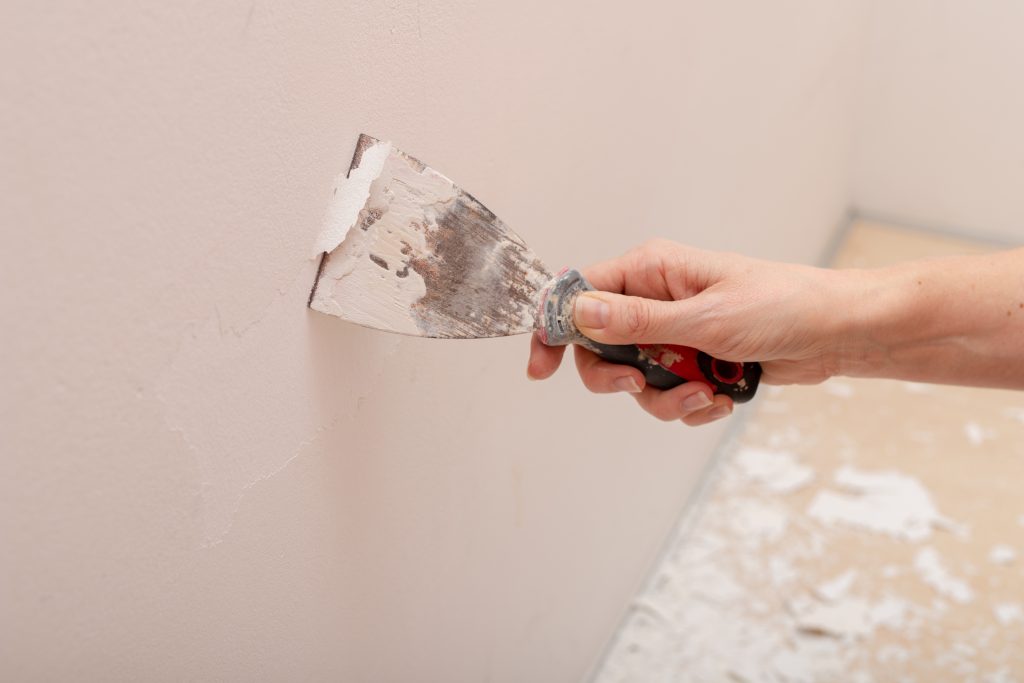
Envirotech provides professional lead paint abatement across Calgary, helping families remove a hidden hazard from older homes with care and proven methods. Lead was common in paint for decades, and disturbing it during repairs or renovations can release fine dust. That dust is the real danger, especially for young children. This guide explains how the process works, what to watch for, and how our team protects your household from start to finish.
Why Lead Paint Still Matters in Older Calgary Homes
Many Calgary houses built before 1990 still carry layers of lead-based coatings. The paint itself is often stable while it stays intact and undisturbed. Problems begin when surfaces chip, peel, or get sanded during a project.
Fine particles then settle on floors, sills, and belongings. Children can ingest this dust through normal hand-to-mouth contact. That is why a careful plan matters far more than a quick coat of new paint.
Health authorities note there is no fully safe level of lead exposure for children. You can review the science through the United States Environmental Protection Agency’s public guidance on household lead sources. Understanding the risk is the first step toward a safer home.
How Professional Lead Paint Abatement Works
Effective lead paint abatement follows a disciplined sequence rather than a rushed job. Our crew begins with testing and inspection to confirm where lead exists. From there, we design containment that keeps dust from spreading.
We isolate the work area, protect nearby surfaces, and control airflow. Trained technicians then remove or treat the affected coatings using methods matched to each surface. Cleanup uses HEPA filtration, and verification confirms the space is ready.
Here is a simple overview of the typical stages you can expect:
| Stage | What Happens | Why It Protects You |
|---|---|---|
| Testing | Certified sampling of suspect surfaces | Confirms whether lead is truly present |
| Containment | Sealed zones and controlled airflow | Stops dust from reaching living spaces |
| Removal or treatment | Safe stripping or approved encapsulation | Eliminates or locks down the hazard |
| Cleanup | HEPA vacuuming and detailed wiping | Captures fine particles left behind |
| Verification | Documented final check | Confirms the area is ready for use |
Removal Versus Encapsulation
Not every surface needs full stripping. In some cases, encapsulation as a safer alternative seals the coating in place with tested products. This can reduce disruption while still controlling the risk.
Full removal makes sense when paint is already failing or when a renovation will disturb it. Our team weighs the condition, the location, and your plans. We then recommend the method that keeps your family safest.
Renovations Are the Highest-Risk Moment
Routine living rarely disturbs intact paint. Renovations, on the other hand, cut, sand, and demolish. That activity is exactly what releases lead dust into the air.
If you plan updates in an older home, arrange safe removal during a renovation before the work begins. Handling the hazard first prevents contamination that is far harder to clean later.
Signs You Should Schedule an Assessment
You do not need to guess about your home. A few clues suggest it is time for a professional look. Watch for these common indicators:
- Chipping, cracking, or peeling paint on older trim, windows, or doors
- A home built before lead-based paint restrictions took effect
- Planned sanding, demolition, or window replacement
- Chalky residue on sills or nearby floors
- Young children or expecting parents living in the space
Any one of these is a reason to test rather than assume. Older homes also tend to meet stricter expectations, so review the safety standards older homes must meet before you start a project. Testing removes the uncertainty and guides a safe plan.
What Sets Our Approach Apart
Careful lead paint abatement is about protecting people, not just stripping surfaces. Our crew treats containment, cleanup, and verification as equally important. Skipping any step can leave dust behind.
Industry estimates suggest a large share of pre-1990 housing still contains some lead-based paint. That reality is why documented methods matter. We give you a clear record of what was done and why.
We also keep communication honest throughout. We provide a straightforward quote only after we assess your home in person. That way, the plan fits your property rather than a generic template.
Living Safely After the Work Is Complete
Finishing the job is not quite the end of the story. A safe home also depends on good habits once our crew leaves. We give every client clear, practical guidance for the months ahead.
Keeping surfaces clean and intact prevents new dust from forming. Wet-wiping sills and floors works far better than dry dusting. Prompt repairs stop small chips from turning into fresh hazards.
We also suggest re-checking any area that sees heavy wear. Windows and doors take the most friction, so they deserve attention. A quick look each year keeps problems from returning quietly.
For families with young children, these routines matter most. Simple monitoring protects the people most vulnerable to exposure. True peace of mind comes from knowing the space stays sound.
Our documentation supports that ongoing care. You receive a record of what was tested, treated, and verified. That paperwork proves useful for future renovations or a sale.
Why Homeowners Choose a Certified Team
Choosing the right crew shapes the entire outcome. Certified technicians follow strict protocols that protect your household. Cutting corners here can undo the whole point of the work.
A trained team knows how to contain dust and verify results. That expertise turns a risky task into a controlled, safe process. Experience also means fewer surprises once the project begins.
Lead paint abatement rewards patience and proper method over speed. We plan each step so nothing is rushed or skipped. The result is a home you can trust for years.
Honest guidance is part of that value. We explain what your home needs and, just as importantly, what it does not. Clear advice helps you make confident decisions.
Frequently Asked Questions
How do I know if my home needs lead paint abatement?
Homes built before 1990 may contain lead-based coatings, especially on trim, windows and doors. A certified paint test confirms whether lead is present. Once we have results, we recommend the safest path forward for your family.
Is lead paint abatement disruptive to my household?
We set up containment and controlled work zones so the rest of your home stays usable during much of the project. Our team schedules the work in stages when possible. We also handle cleanup and verification before you return to the area.
Can lead paint simply be painted over?
Painting over lead is not a substitute for proper abatement, because the hazard remains beneath the surface and can be disturbed later. Encapsulation with tested products is sometimes appropriate, but only after an assessment. Our crew explains when each method fits your situation.
Do you clean up and verify the area afterward?
Yes. We use HEPA vacuuming and detailed cleaning, then confirm the space is ready before we finish. Verification gives you documented peace of mind. You receive clear guidance on maintaining a safe environment going forward.
Contact Envirotech
Reach the Envirotech team when you are ready for an honest, on-site assessment.
- Phone: (403) 608-2747
- Address: 5545 1A Street SW, Calgary, AB T2H 0E6
- Hours: Monday – Saturday, 8 a.m. – 6 p.m.