
Hiring professional mold removal is a big decision, and Envirotech – Abatement & Remediation wants you to ask the right questions before anyone sets up equipment. Not every crew follows the same standards. Some skip containment, ignore the moisture source, or leave without proof that the job worked. This checklist gives you ten clear questions to ask, the answers to look for, and the red flags to avoid.
Start With Moisture, Containment, and Safety
The first three questions decide whether the job protects your home or spreads the problem.
Question One: Will You Find and Fix the Moisture Source?
Mold returns when moisture stays. A reliable contractor looks for the cause before starting any cleanup. They check plumbing, roof lines, foundation drainage, and ventilation.
Listen for specifics. A strong answer names the tools and steps, such as moisture meters and thermal imaging. A weak answer promises to "spray and wipe" and nothing more.
If the contractor cannot repair the source, they should still identify it in writing. You can then hire a plumber or roofer to fix it. Our post on warning signs that call for mold remediation shows what hidden moisture often looks like.
Question Two: How Will You Contain the Work Area?
Disturbed mold releases spores. Without containment, those spores settle in clean rooms and create new colonies. Professional crews seal the work zone with plastic sheeting and tape.
They also run negative air machines with HEPA filters. These machines pull air out of the work area and trap spores. Ask how many machines the crew plans to use and where the exhaust will go.
Good answers include a clear entry and exit path, a decontamination step for workers, and covered floors along the route. Red flags include "we just close the door" or "we open the windows."
Question Three: What Protective Equipment Will Workers Wear?
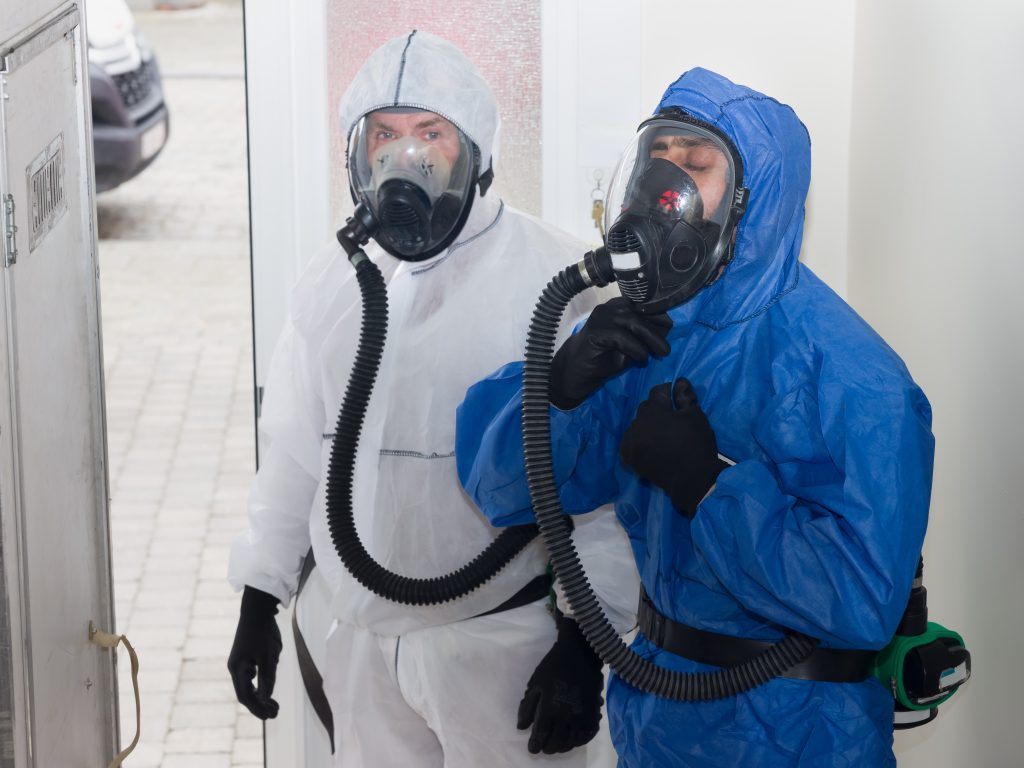
Workers should wear respirators, disposable suits, gloves, and eye protection. This gear protects them and prevents them from carrying spores out on their clothes.
Ask the contractor to describe their safety program. A prepared company answers without hesitation. It also trains staff and replaces gear between jobs.
What Professional Mold Removal Should Include
Use this table as a quick benchmark for professional mold removal when you compare proposals. Each stage should appear in some form.
| Stage | What it includes | Why it matters |
|---|---|---|
| Assessment | Moisture readings, visual survey, optional sampling | Defines the scope of work |
| Containment | Plastic barriers, negative air, signage | Stops cross-contamination |
| Removal | Cutting out affected porous materials, HEPA vacuuming, damp wiping | Takes growth out of the building |
| Drying | Dehumidifiers and air movers until readings return to normal | Prevents regrowth |
| Verification | Post-work inspection and, where appropriate, clearance sampling | Proves the result |
| Reconstruction advice | Notes on rebuilding with moisture-resistant materials | Reduces repeat problems |
If a proposal leaves out several of these stages, ask why.
Materials, Debris, and Verification
The next group of questions covers what leaves the building and how you know the work succeeded.
Question Four: What Gets Removed and What Gets Cleaned?
Porous materials such as drywall, insulation, and carpet usually need removal when mold has colonized them. Hard surfaces like framing and concrete often clean well with HEPA vacuuming and approved cleaning methods.
Ask the contractor to mark the removal boundaries before work begins, because professional mold removal should never be open-ended. Expect them to explain why each material comes out. A contractor who promises to save everything may be cutting corners. One who tears out everything may be overreaching.
Question Five: How Do You Handle Debris?
Mold-contaminated debris should go into sealed bags and leave the building by a planned route. Dragging open bags through clean rooms spreads spores.
Ask where the bags will travel and how the crew will clean the path afterward. Good crews wipe floors, vacuum, and inspect the route.
Questions Six to Eight: Drying, Verification, and Records
Question six: how will you dry the area? Look for dehumidifiers and air movers, with moisture readings logged until materials reach normal levels.
Question seven: how will you verify the result? Expect a visual inspection and, for larger jobs, clearance sampling by an independent party. Our article on how professional testing identifies invisible indoor threats explains the sampling side.
Question eight: what paperwork will I receive? Ask for a written scope, photos, moisture logs, and any lab reports. These records matter to insurers and future buyers.
Training, Guarantees, and Proposals
The last questions test the company behind the crew.
Questions Nine and Ten: Training and Guarantees
Question nine: how is your team trained? Ask about formal training in mold remediation, respiratory protection, and safe work practices. Experience matters, but documented training matters too.
Question ten: what do you guarantee? A reputable contractor stands behind the work in writing and explains what the guarantee covers. Read the terms carefully. A guarantee that excludes moisture recurrence from unrelated causes is normal, but vague promises are not.
Another helpful step is to read independent guidance. The U.S. Centers for Disease Control and Prevention publishes health-focused information on its mold and health pages. It can help you understand why professional mold removal takes the precautions it does.
Comparing Written Proposals Fairly
When two proposals arrive, compare the scope line by line, not the page count. Check that each one names the affected rooms, the containment method, the drying plan, and the verification step. A short proposal that skips these items hides risk.
Ask each contractor to explain differences in plain language. If one proposal removes more material than another, find out why. The answer should come from your moisture readings and inspection findings, not from habit.
Remember that an honest quote comes after assessment. Any figure offered over the phone without seeing the property deserves caution.
Red Flags in Professional Mold Removal Proposals
Some warning signs should end the conversation. Watch for a contractor who:
- Refuses to put the scope in writing
- Pushes you to sign on the spot
- Skips the moisture investigation
- Promises to "kill" all mold with a fog or bomb
- Offers no containment plan
- Cannot explain how they verify results
Trust your instincts. A confident professional welcomes questions and answers them plainly.
How Envirotech – Abatement & Remediation Approaches Mold Projects
We begin with a careful look at moisture and growth, then explain our findings and options before any work starts. You can see the range of work we do on our mold removal page for Calgary. If your property sits outside the city, check the Okotoks mold removal page.
Frequently Asked Questions
Can I stay in my home during mold removal?
It depends on the size and location of the work. Small, well-contained jobs may allow you to stay in unaffected rooms. Larger jobs, or households with sensitive members, often call for temporary relocation.
How long does the process take?
Timelines vary with the extent of growth, the materials involved, and drying needs. Small areas can finish in a few days, while larger projects take longer. Your contractor should give a realistic range after the assessment.
Will bleach solve the problem?
Bleach does not penetrate porous materials, so roots of growth often survive. It also does not fix moisture. Professional methods remove contaminated material and address the cause.
Does insurance cover mold work?
Coverage varies by policy and by the cause of the water damage. Talk with your insurer early and keep all reports and photos. We can supply documentation to support your claim.
Contact Envirotech – Abatement & Remediation
Have questions about your project? Call (403) 608-2747 or visit 5545 1A Street SW, Calgary, AB T2H 0E6. We are open Monday – Saturday, 8 a.m. – 6 p.m. We give an honest quote after assessing your property.