
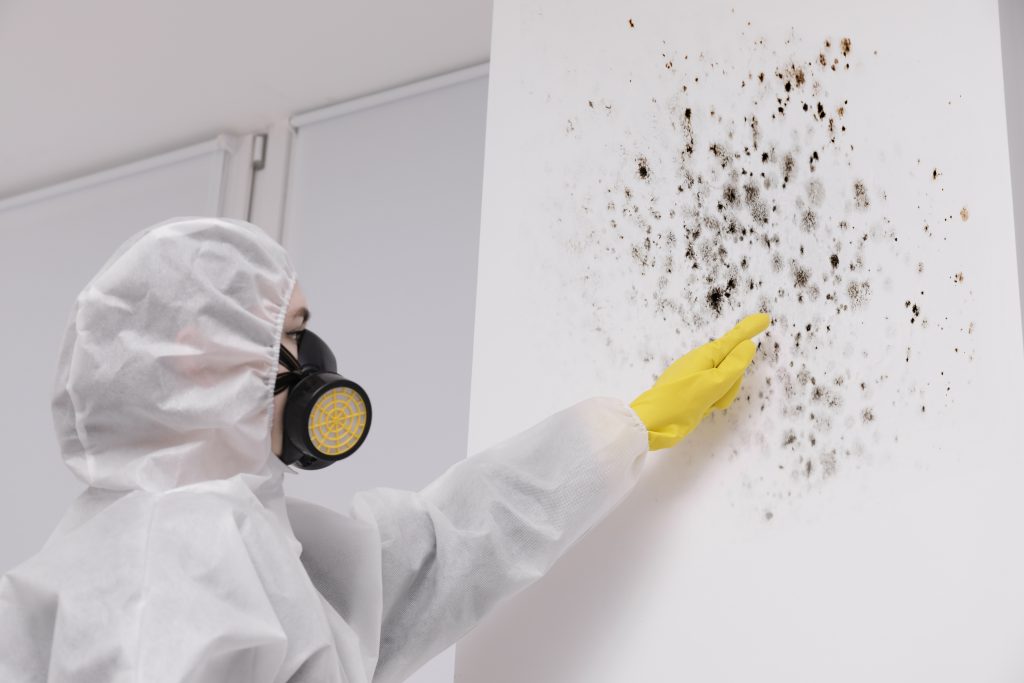
You scrub the grout. You spray the bleach. The mold disappears for a few weeks — and then it comes right back. Sound familiar? You are not doing anything wrong. However, the cleaning approach most people use treats the symptom, not the cause. Bathroom mold recurrence is one of the most common complaints Envirotech hears from Calgary homeowners.
Bleach Is Not a Long-Term Solution
Here is the first thing to understand. Bleach kills mold on the surface, but it does not penetrate porous materials like grout, drywall, and caulking. Consequently, the mold root structure — called hyphae — survives deep inside those materials and regrows within weeks. Furthermore, bleach dilutes quickly when applied to a surface, which means its active concentration often drops below the level needed to fully kill mold colonies.
Professional mold removal uses antimicrobial treatments designed to penetrate porous surfaces. Additionally, professionals physically remove contaminated materials when the mold growth has gone deep enough. Simply spraying a store-bought product cannot replicate either of those steps.
The Real Cause: Persistent Moisture
Mold does not grow without moisture. Therefore, if mold keeps returning, a persistent moisture source drives it. Most homeowners focus on steam from showers. However, steam is rarely the sole culprit in recurring mold problems. Instead, look for these specific sources:
Grout and caulking failures let water seep behind tiles, where it sits on drywall for days. Exhaust fans that vent into the attic rather than outside trap moisture in the ceiling. Furthermore, slow leaks from supply lines under the sink or behind the toilet wall create constant dampness that never dries out. Additionally, condensation on cold exterior walls during Alberta’s temperature swings creates a chronic moisture zone.
Where Mold Hides Beyond What You Can See
The mold you see on your tile surface is usually a fraction of the total growth. Specifically, the more significant colony often lives behind the tile, inside the wall cavity, or above the ceiling. This hidden growth continues to spread spores even after you clean the visible patches. Moreover, spores travel through your home’s air system and settle in other rooms.
Envirotech’s technicians use moisture meters and thermal imaging during inspections. Consequently, they identify hidden moisture zones that standard visual inspection misses entirely. This technology reveals exactly where the moisture and mold have spread before any work begins. Therefore, you get a complete picture of the problem, not just the tip of the iceberg.
Testing Tells You What You Are Actually Dealing With
Not all mold species respond the same way to treatment. Some common bathroom molds are relatively low-risk. However, certain species — including Stachybotrys chartarum, commonly called black mold — produce mycotoxins that cause serious respiratory and neurological effects. Therefore, identifying the specific species matters for both your health and your treatment plan.
Professional mold testing involves air sampling and surface swabs analyzed by a certified laboratory. Results identify the species present and the concentration of spores in your air. Consequently, Envirotech builds a targeted remediation plan based on real data rather than guesswork. This approach also gives you documentation to share with your doctor if you or your family experience health symptoms.
What a Professional Remediation Actually Involves
Many homeowners expect mold remediation to be quick. In practice, a thorough job takes several steps. First, the team sets up containment barriers to prevent spores from spreading to clean areas of your home. Second, technicians remove all contaminated porous materials — drywall, insulation, grout, and caulking — rather than simply treating them.
Third, the team treats structural surfaces with industrial antimicrobial agents. Fourth, the area dries completely using commercial air movers and dehumidifiers. Furthermore, a post-remediation clearance test confirms the mold count has returned to acceptable levels before any reconstruction begins. Envirotech follows this full protocol on every project.
When Water Damage Is the Root Cause
Recurring bathroom mold sometimes traces back to a water event that homeowners did not fully address. For example, an undetected slow leak behind the shower wall can saturate wall cavities for months. By the time the mold becomes visible, the damage goes deep. Similarly, a previous flooding event in a home’s lower level can leave residual moisture in walls and subfloors that slowly migrates upward.
Professional water and flood restoration involves thorough drying protocols and moisture documentation. However, if a past water event received incomplete restoration, residual moisture continues feeding mold growth for years. Envirotech identifies these legacy moisture problems and addresses the source rather than just the mold you can see.
Other Hazards in the Same Space
Bathrooms in older Calgary homes often present multiple hazards at once. Specifically, the same walls hiding mold may contain materials that require careful handling. For example, some older bathroom tiles contain asbestos in the tile body or adhesive. Before cutting into walls during mold remediation, Envirotech checks for hazardous materials — including those that require asbestos abatement — to ensure every remediation project stays safe from start to finish.
Additionally, older bathroom surfaces sometimes carry lead paint beneath newer coats, especially on window trim and wooden vanity frames. Identifying these hazards before remediation begins protects both the homeowners and the technicians. Envirotech routinely conducts pre-project hazard assessments in older properties to catch these issues early.
How to Actually Prevent Mold From Returning
After professional remediation, prevention starts with moisture control. Specifically, run your bathroom exhaust fan for at least 20 minutes after every shower. Ensure the fan vents to the outdoors, not into the attic. Furthermore, re-caulk around the tub and shower annually to maintain a waterproof seal.
Fix any plumbing leaks immediately, no matter how minor they seem. Additionally, consider a bathroom-specific dehumidifier if your space lacks adequate ventilation. These steps, combined with professional remediation that removes the root cause, give you a genuinely mold-free bathroom rather than a temporary fix. Envirotech provides homeowners with a written prevention checklist after every project so the results last.
Frequently Asked Questions
Q: Why does mold come back in the same spot every time? The same moisture source drives regrowth. If the underlying leak, ventilation failure, or material damage persists, mold returns regardless of how thoroughly you clean the surface.
Q: Is bathroom mold always a health risk? Not all bathroom mold poses the same level of risk. However, any mold growth should prompt investigation because species identification requires testing. Some common bathroom molds are more hazardous than they look.
Q: Can I stay in my home during mold remediation? In most cases, yes, but the affected area needs proper containment to prevent spore spread. Envirotech sets up barriers and uses negative air pressure equipment to protect the rest of your home during the process.
Q: How long does bathroom mold remediation take? Small to medium bathroom mold problems typically take one to three days. Larger infestations that have spread into wall cavities may take longer. Envirotech provides a full scope and timeline before work begins.
Q: Does home insurance cover mold remediation? Coverage depends on the cause. Mold resulting from a sudden water event like a burst pipe often falls under a home insurance claim. Mold from slow leaks or maintenance neglect typically does not. Envirotech can help you document the source for your insurer.